
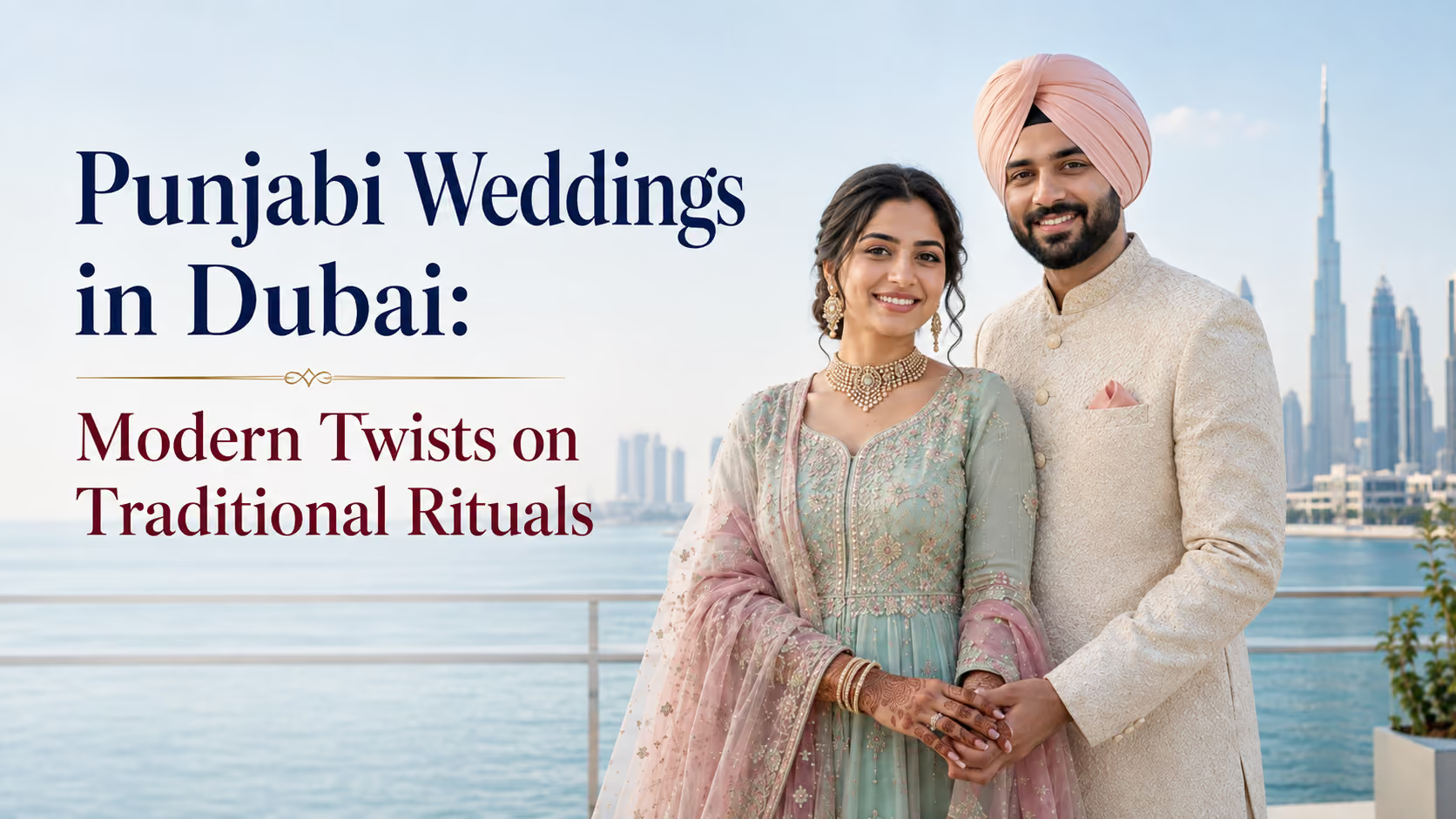
A Punjabi wedding has never really been a quiet affair, and moving the celebration to Dubai hasn't changed that. If anything, the city has given Punjabi families an even bigger canvas: desert dunes for a pre-wedding shoot, a beachfront lawn for the pheras, a ballroom with skyline views for the reception. Dubai has been ranked among the world's top destinations for weddings, and Punjabi couples, both Sikh and Hindu, have been quietly turning that reputation into some of the city's most spectacular celebrations.
What's interesting isn't that Punjabi weddings in Dubai have become more lavish. It's how carefully the community has kept the meaning of the rituals intact while completely reimagining the setting around them.
Why Dubai Has Become a Punjabi Wedding Hotspot
Dubai's Department of Economy and Tourism has actively positioned the city as a global wedding destination, and research from Strictly Weddings has ranked it among the top spots in the world for exactly that reason: year-round sunshine, a genuine range of settings from beach to desert to skyline, and a hospitality industry built for large, detail-heavy celebrations.
For Punjabi families specifically, there's a practical reason too. Sikh couples don't need to compromise on the sanctity of the Anand Karaj to marry in Dubai. Guru Nanak Darbar in Jebel Ali, one of the largest gurdwaras in the world, has hosted weddings and matrimonial ceremonies since opening in the early 2010s, giving Sikh families a genuine place of worship rather than a rented hall standing in for one. Hindu Punjabi families, meanwhile, have leaned into Dubai's growing roster of venues built for exactly this kind of multi-day, ritual-heavy celebration.
There's also the guest-list reality that shapes so many NRI weddings. With Punjabi families scattered across the UK, Canada, the US, and India, Dubai's international connectivity turns a wedding into something every branch of the family can actually attend without anyone facing a punishing journey.
The Rituals That Haven't Changed
However glamorous the venue, the core sequence of a Punjabi wedding in Dubai still moves through the same emotional beats it always has.
Roka and Sagan open the process, formally announcing that both families have accepted the match, followed by shagun rituals and an exchange of gifts.
Mehndi remains the color-drenched, music-filled evening it's always been, with intricate henna applied to the bride, her sisters, and close friends, usually built around dance performances that the whole family has been secretly rehearsing for weeks.
Sangeet carries the same spirit of families competing, affectionately, through choreographed performances, though today it often plays out with professional lighting and a live DJ rather than a borrowed speaker system.
Milni, the formal meeting between the two families, still happens with the same warmth and structure it always has, right before the couple's actual union.
The ceremony itself is the one part nobody touches. Sikh couples honor that through the Anand Karaj, taking the four Lavan around the Guru Granth Sahib inside a gurdwara, unhurried and unchanged regardless of how far from Punjab the wedding is taking place. Hindu Punjabi couples hold the same line with their pheras, circling the sacred fire as a pandit leads them through each vow. Being on foreign soil seems to make families more careful about getting these moments exactly right.
What follows hasn't lost its weight either. Doli still catches everyone off guard the same way it always has, that quiet, tearful moment when the bride leaves her family home for the last time as a daughter. Then comes the reception, every bit as festive as it's ever been, just staged now against a rather more spectacular skyline.
The Modern Twists Showing Up at Dubai Weddings
Where things genuinely look different is in the details of those core rituals.
Desert camps have become a favorite setting for Mehndi and Sangeet nights, trading a decorated hall for string lights strung across the dunes and a bonfire glowing behind the dance floor. It's become one of the more distinctive ways Punjabi families use Dubai's landscape rather than simply importing a Punjab-style tent wedding wholesale.
Pre-wedding photography now leans heavily on Dubai's skyline and coastline, with couples shooting portraits against the Burj Khalifa, along Palm Jumeirah, or out in the desert at golden hour, images that end up doing double duty as wedding invitations and social media content.
Fusion choreography has crept into the Sangeet, blending traditional bhangra and giddha with Bollywood numbers and, increasingly, Western pop routines, especially in families with a lot of second-generation cousins who grew up outside Punjab entirely.
The traditional five-to-seven-day wedding has often shrunk to a tighter three-day format, largely driven by venue costs and the reality that most guests are flying in and working with limited leave. Families are getting more strategic about which rituals they dedicate to their own events and which they fold together.
Drone videography and cinematic wedding films have replaced the old handheld camcorder entirely, and it shows in how these weddings get shared afterward, less a physical photo album, more a highlight reel built for Instagram.
Menus have widened beyond strictly Punjabi fare, with couples adding Emirati and pan-Asian stations alongside classic butter chicken and sarson da saag, a reflection of just how multicultural the guest list at a Dubai wedding tends to be.
Digital invitations and wedding websites have largely replaced printed cards, partly out of convenience for a guest list spread across four or five countries, and partly because a well-designed video invite has become its own small piece of the celebration.
Through all of it, the dhol still leads the baraat, the mehndi still stains hands for weeks, and the families still cry at the same moments they always have. Dubai has changed the backdrop of the Punjabi wedding, not its heart.






.avif)
.avif)


